
Everyone Is Fishing in the Same Pond
Most real estate lead lists come from the same handful of national data aggregators. They buy records in bulk, package them, and resell them to thousands of investors — including every one of your competitors. By the time a "motivated seller list" reaches you, it's been bought, dialed, and texted by dozens of other people in your market. As we covered in the guide on why premium data beats recycled data, cheap data is cheap because it's recycled.
There's a tier above that. Not "the same data, fresher" — an entirely different class of data that doesn't exist as a product you can buy anywhere. This is what separates investors who consistently find deals nobody else sees from everyone fighting over the same recycled lists.
The Data Almost Nobody Has Access To
When most people think about better real estate data, they imagine getting the same public records a little faster. That's not what this is.
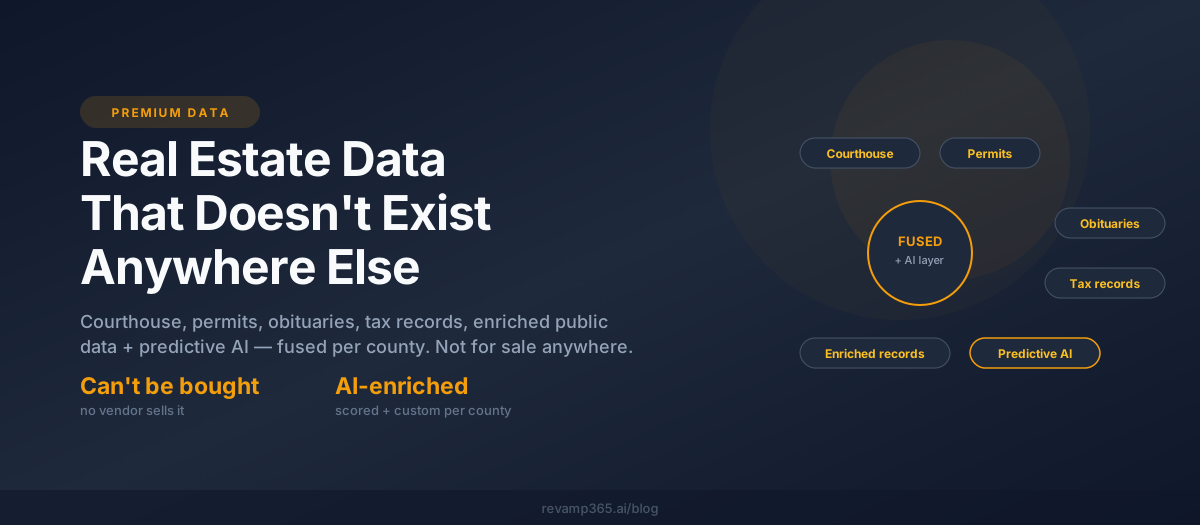
This is a fused, enriched, AI-augmented data layer built county by county — combining sources almost no one pulls together, cleaning and cross-referencing them into something usable, and then layering predictive intelligence on top. There is no vendor you can call to buy it. It isn't sitting in a catalog. It's custom infrastructure, and that's exactly why it's an edge.
Here's what actually goes into it.
What's Actually In It
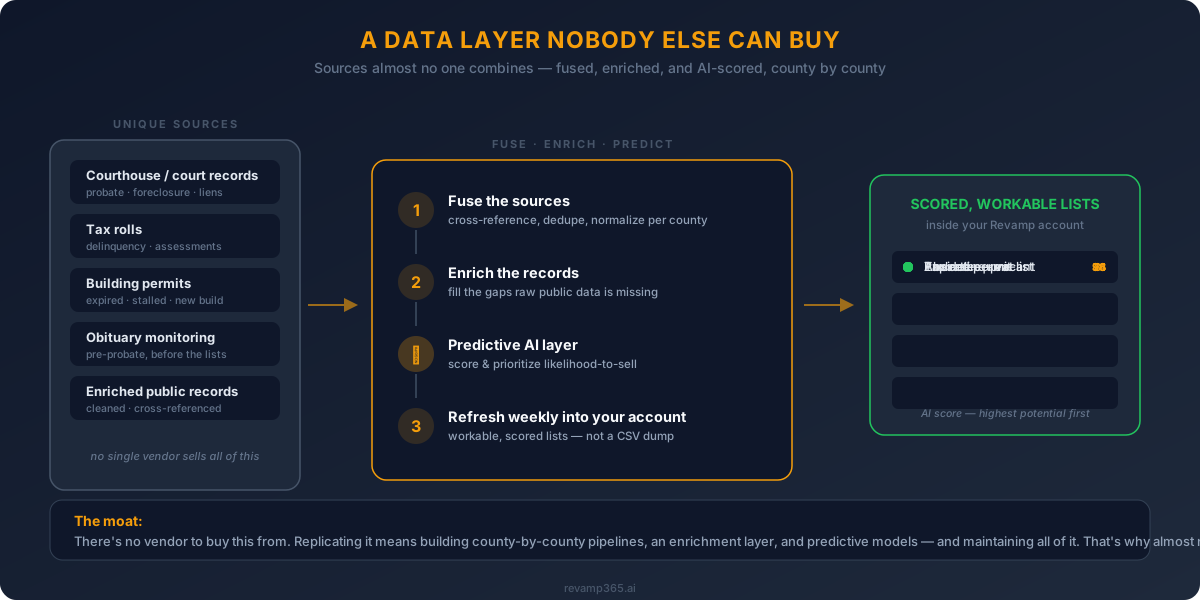
Courthouse and county court records
The original source the aggregators scrape from — and far deeper than the thin slice they resell. Probate and pre-probate, foreclosure and pre-foreclosure, divorce filings, evictions, ejectments, landlord-tenant complaints, and civil cases and judgments — all filed at the county before they ever appear anywhere commercial. Each one is a life event or a legal fight that tends to end in a sale. The national lists package the one or two record types that are easy to standardize at scale; a county feed pulls the whole docket, and pulled at the source, you see it first.
Tax record data
Delinquencies, assessment history, and ownership detail straight from the county tax rolls. Tax pressure is one of the earliest and most reliable signals of a motivated owner — and the tax office knows before any list does.
Liens and financial-distress records
Beyond tax delinquency, a property can carry mechanic's liens, utility liens, judgment liens, and code-enforcement liens — each one a public claim filed against the property by someone the owner owes. Liens stack, they don't quietly disappear, and they're one of the cleanest signals that an owner is under financial pressure and looking for a way out. Almost no commercial list surfaces them; pulled from the county and cross-referenced to the parcel, they become a filter you can build lists on.
Building permits and code violations
This is one almost nobody works, and it's gold. Pulled permits, expired permits, and stalled projects tell a story: an expired renovation permit on a property often means a project that ran out of money or motivation — a seller who needs out. Code and permit violations point at properties an owner can't or won't maintain, with a city clock ticking on the fines. New-construction and demolition permits map where activity and equity are moving. Permit and violation data turns intent and neglect into signals you can target.
Obituary monitoring
Carefully monitored obituary data can surface inherited-property opportunities before they ever reach a traditional probate list — which means before your competition is even aware the lead exists. By the time a property hits a probate list everyone subscribes to, the early mover has already made contact.
Enriched public records
Raw public data is messy, inconsistent, and full of gaps. The enrichment layer cleans it, standardizes it, cross-references it across sources, deduplicates it, and appends the context that raw records are missing — turning a pile of conflicting filings into a single, reliable picture of a property and its owner.
Predictive AI-enriched signals
This is the layer that genuinely doesn't exist anywhere else. On top of the raw and enriched data, predictive models score and prioritize — surfacing patterns and likelihood signals that no static list can. Instead of handing you ten thousand records and wishing you luck, the data points you at the ones most worth your time first.
Why Competitors Can't Just Buy This
Here's the part that makes it a real, durable moat: even if a competitor wanted this exact data, there's nowhere to buy it.
Think about what it would take to replicate. You'd have to build collection pipelines for courthouse records, tax rolls, permit offices, and obituary sources — separately, for every single county, each with its own systems and quirks. Then you'd have to build the enrichment layer to clean and fuse all of it. Then you'd have to build and train the predictive models on top. Then you'd have to maintain all of it as every county changes its formats and access rules.
That's not a purchase. It's an enormous, ongoing engineering effort — which is precisely why almost nobody does it, and why the few who have it hold a real advantage. National aggregators sell the lowest-common-denominator data that's easy to package at scale. The hard, fused, county-specific, AI-enriched layer is the opposite of easy to package — and that's the whole point.
How Revamp 365 Builds It for Your Market
This is what Revamp 365's AI List Building is built to do: stand up that unique data layer for your specific county and deliver it as clean, workable lead flow inside your account — not a generic national file you buy off a shelf.
The process works in three stages:
- We study the county. Every county exposes records differently, so we map the sources, fields, access patterns, quality issues, and update cadence first. We tell you up front what's reliable, what's partial, and what would need a hybrid approach.
- We build the infrastructure. Our team creates the custom pipeline — collection, normalization, enrichment, and the predictive layer — needed for that market's records.
- Your lists refresh on a recurring basis. Fresh, scored leads are pushed into your Revamp account, with a target of weekly delivery, so your acquisition team works targeted lists instead of rebuilding spreadsheets.
Because the data lands inside Revamp, those leads flow straight into everything else — your filters, skip tracing, Deep Trace, CRM, SMS, and voice workflows — instead of sitting in a CSV you import by hand.
The Signals You Can Target
Once a feed is built, all of that intelligence becomes filters you can actually search and build lists on inside Revamp's off-market property search. This is where the depth shows up. Most platforms hand you a handful of distress tags. A fused county feed gives you the full surface of life events, court actions, and liens that move people to sell:
- Life-event signals — probate and pre-probate, obituary-sourced inherited property, divorce filings, and elderly-owner indicators. A life event is the single strongest reason a property changes hands, and it shows up in the public record long before the property ever hits the market.
- Court-action signals — foreclosure and pre-foreclosure, evictions, ejectments, landlord-tenant complaints, and civil cases and judgments. A landlord grinding through an eviction, or an owner named in a civil suit, is very often ready to be done with the property.
- Lien and financial-distress signals — tax delinquency and tax liens, mechanic's liens, utility liens, judgment liens, and code-enforcement liens. Every lien is a public claim filed against the property and a flashing sign of an owner under real financial pressure.
- Property-condition signals — permit and code violations, expired or stalled permits, vacancy, and long-term ownership. These point you at tired properties and tired owners — the ones a city clock is already ticking on.
- Ownership signals — absentee owners, out-of-state owners, trust-owned, corporate- and LLC-owned, and elderly-owner indicators.
- Deal economics — equity, estimated profit and cashflow, ARV, and value ranges.
The combination is the point. The life-event, court-action, and lien signals surface who might sell — early, and from angles your competitors never even pull — while the deal-economics filters tell you which of those is actually worth working. Stacking them is where it gets dangerous: "pre-probate and high-equity and absentee," or "code violation and tax-delinquent and vacant," turns a county-sized list into a short list of owners who have both a reason to sell and a deal worth doing.
Why This Is the Ultimate Premium-Data Play
Everything we build comes back to one idea: the quality of your data decides the quality of your deal flow. A single deal can be worth tens of thousands of dollars. If a data layer your competitors can't even buy connects you to motivated sellers before they appear on any commercial list, the advantage compounds every single week the feed runs.
You're not buying a list. You're buying exclusive access to signals that, for most investors, simply don't exist.
How It Fits the Funnel
This data sits at the very top of the acquisition funnel and makes every step below it more productive:
- Unique, AI-enriched county data surfaces the freshest, highest-signal leads in your market.
- List building and filtering narrows them to the properties whose economics actually work.
- Skip tracing gets you phone numbers and emails for the owners.
- Deep Trace pierces the LLCs and trusts that standard skip tracing can't.
Better data at the top makes everything below it sharper. Premium in, deals out.
How to Get It for Your County
Because every county is different and the build is custom, this is scoped individually rather than sold as a flat product. What it takes depends on the county's complexity, how accessible its records are, the automation difficulty, and the enrichment required — so it's worked out during a consultation, not pulled off a price list.
The starting point is simple: tell us the county you want to dominate and the kind of lead flow you're after. We'll tell you honestly what's possible there, what's reliable, and whether the data advantage is worth building.
Frequently Asked Questions
What makes this data different from a normal lead list?
A normal lead list is commodity public data, sold in bulk to thousands of investors at once. This is a fused, enriched, AI-augmented layer — the full county court docket (probate, divorce, evictions, ejectments, landlord-tenant, civil cases and judgments), tax data and liens (tax, mechanic's, utility, judgment, and code-enforcement), building permits and code violations, obituary monitoring, cleaned public records, and predictive scoring — assembled per county. It's not the same data faster; it's data that isn't packaged or sold anywhere else.
What kinds of court and public records can you actually pull?
Far more than the one or two distress tags national lists resell. Depending on what a county exposes, a feed can include probate and pre-probate, divorce filings, foreclosure and pre-foreclosure, evictions, ejectments, landlord-tenant complaints, and civil cases and judgments — plus the full range of liens (tax, mechanic's, utility, judgment, and code-enforcement) and permit and code violations. Each one is a different angle on the same question: which owners have a reason to sell. Pulling many of them at once, per county, and fusing them to the parcel is exactly what no commodity list does.
Can my competitors get the same data?
Not off the shelf — there's no vendor selling it. Replicating it would mean building collection pipelines for every county's courthouse, tax, permit, and obituary sources, plus an enrichment layer and predictive models on top, and maintaining all of it as counties change. That engineering barrier is exactly what makes it an edge.
What is permit data good for in real estate?
Building permits reveal intent and motivation. An expired or stalled renovation permit often signals a project that ran out of money — a motivated seller. New-construction and demolition permits show where activity and equity are moving in a market. Most investors never touch permit data, which is part of why it's such a strong, uncrowded signal.
How does obituary monitoring help find deals?
Monitored obituary data can surface likely inherited-property opportunities before they appear on traditional probate lists — meaning you can reach heirs earlier, with less competition, often before the lead is on anyone else's radar.
What does "AI-enriched" actually mean here?
On top of the raw and cleaned data, predictive models score and prioritize records — surfacing likelihood and pattern signals a static list can't. Practically, that means the data points you at the highest-potential leads first instead of dumping an undifferentiated pile on you.
How much does it cost and how is it delivered?
It's custom, so pricing is scoped during a consultation rather than listed as a flat price — it depends on county complexity, record access, and the enrichment required. Delivery targets recurring, typically weekly, drops of fresh leads directly into your Revamp account as workable lists, ready to filter, skip trace, and connect to your SMS, voice, and CRM workflows.
Want data your competitors can't buy? Tell us your county and we'll scope a custom premium data build — learn more on the AI List Building page.
The largest database of curated off-market deals in the nation.
Claim Your Access