
The Wall Every Investor Hits
You pull a perfect off-market lead. High equity, absentee owner, sitting in a market you know. You skip trace it, ready to start outreach — and the owner comes back as "Riverside Holdings LLC."
No person. No mobile number that belongs to a human being. Just an entity, a registered-agent address that's probably a law office, and a dead end.
This happens constantly, and it happens on exactly the deals you most want. The more valuable the property and the more sophisticated the owner, the more likely it sits inside an LLC, a trust, or a holding company. The investors who can get past the entity to the actual decision-maker are the ones who win those deals. Everyone else mails the LLC and hopes.
This guide is about getting past the wall.
Why Owners Hide Behind LLCs
There's nothing shady about it — putting property in an LLC is standard practice. Owners do it for:
- Liability protection — separating personal assets from the property
- Privacy — keeping their name off public-facing records
- Tax and estate planning — structuring ownership across entities
- Portfolio organization — one LLC per property, or per market
The side effect is that the public record shows the entity, not the human. And standard skip tracing is built to find the human at an address — so when the "owner" is a company, it has nothing useful to grab onto.
Why Skip Tracing Alone Stalls on LLCs
Standard batch skip tracing takes a name and address and returns current phone numbers and emails for that person. It's fast, cheap, and exactly right for the 70–85% of your list that's owned by individuals.
But feed it an LLC and one of two things happens:
- You get nothing — there's no individual to trace.
- You get the registered agent — which is usually an attorney's office or a registered-agent service, not the person who can actually sell you the property.
The registered agent is a legal contact point, not a decision-maker. Calling them gets you "I can't share client information." To reach the real owner, you have to answer a different question: who actually controls this entity? That's a research problem, not a lookup — and it's exactly what Deep Trace is built for.
What Is Deep Trace?
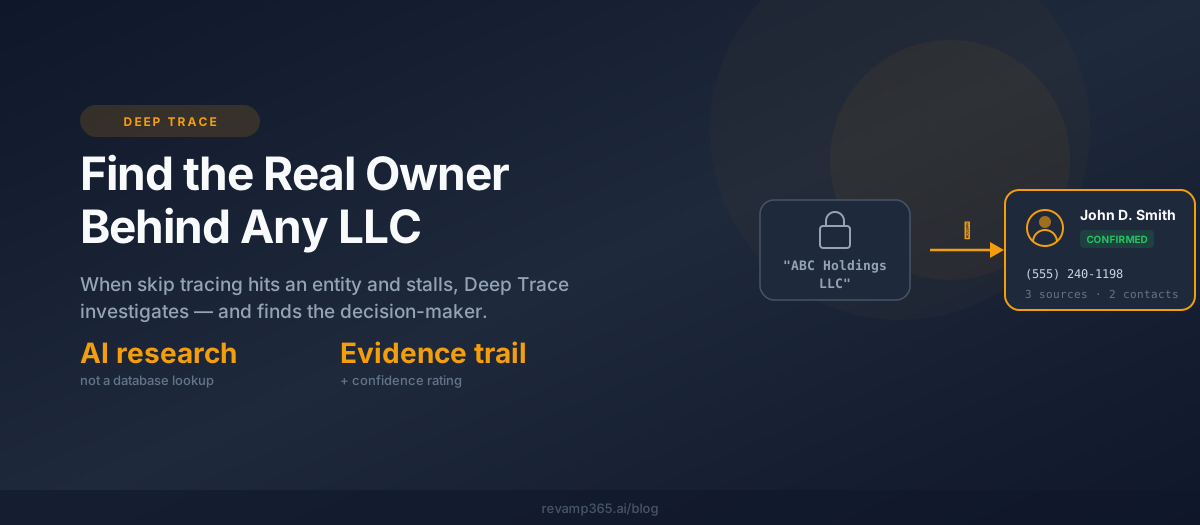
Deep Trace is an AI-powered research pass that runs when a standard lookup isn't enough. Instead of querying a single contact database, it investigates — the way a skilled researcher would, but in seconds instead of hours.
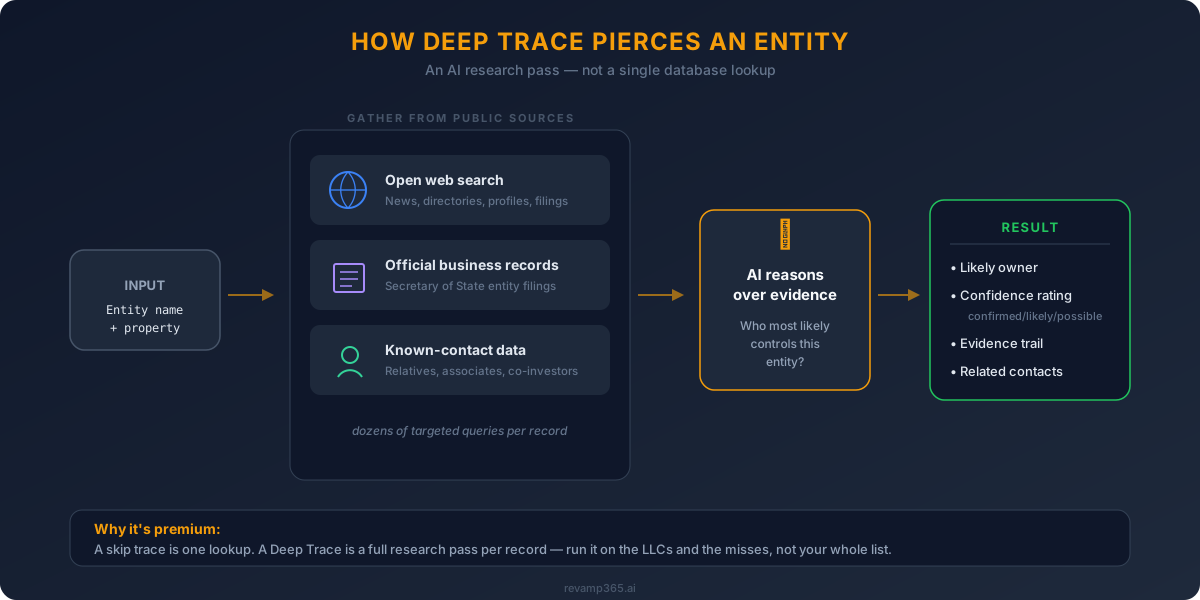
Given an entity name and property, Deep Trace:
- Searches the open web across many targeted queries — business filings, news, directories, professional profiles, and any public footprint tied to the entity.
- Cross-references official business records — Secretary of State business-entity data and other public filings that connect entities to the people behind them.
- Uses AI to assemble the picture — a language model reads everything it surfaced and reasons about who the most likely owner or controlling party is, rather than dumping raw links on you.
- Rates its own confidence — every result comes back tagged confirmed, likely, or possible, so you know how much weight to put on it.
- Returns an evidence trail — the sources behind the conclusion, so you can verify it yourself instead of trusting a black box.
The output isn't just a name. It's a name, a confidence level, the evidence that supports it, and related contacts and known associates surfaced along the way — enough to make a real outreach decision.
What Deep Trace Gives You That Skip Tracing Doesn't
| Standard Skip Trace | Deep Trace | |
|---|---|---|
| Core question | "What's the phone number for this person?" | "Who actually controls this entity?" |
| Best for | Individually-owned properties | LLCs, trusts, holding companies, dead-end traces |
| Method | Contact-database lookup | AI research across web + official records |
| Output | Phones, emails for a known person | Likely owner + confidence rating + evidence trail + related contacts |
| Speed | Seconds | Seconds to a couple of minutes (it's researching) |
| Cost | Lower (per record) | Premium (it does far more work) |
Think of skip tracing as looking someone up, and Deep Trace as investigating them. You wouldn't run a full investigation on every record — you'd waste money. You run it on the ones that matter and the ones that stall.
When to Use Deep Trace
Deep Trace earns its premium on a specific set of records. Reach for it when:
- The owner is an LLC, trust, or holding company and you need the human behind it.
- Skip tracing came back empty or with a clearly-wrong contact (a registered agent, a disconnected number).
- The property is high-value enough to justify the deeper dig. On a deal worth tens of thousands, spending a bit more to reach the actual owner is obvious math.
- You're chasing a specific, known target — a portfolio owner or repeat seller you want to reach directly.
For the bulk of an individually-owned list, standard skip tracing is the right tool. Deep Trace is the scalpel you bring out for the records that are both hard and worth it.
What Does Deep Trace Cost?
Deep Trace is priced per investigation, and because it runs a full research pass instead of a single database hit, it costs more than standard skip tracing. On paid plans it runs roughly $0.12 to $0.50 per record depending on your plan; free accounts pay $1.00 per Deep Trace.
Here's the framing that matters, and it's the same logic behind why premium data beats cheap recycled data: a single deal can be worth tens of thousands of dollars. If reaching the real owner behind one LLC turns into one deal you'd otherwise have mailed into the void, the cost of the trace rounds to zero. You're not paying for data — you're paying for the connection to a decision-maker your competition can't reach.
How to Run Deep Trace in Revamp 365
Deep Trace is built into the platform — no separate tool, no exports.
For a single property: Open the property's owner information, and when the owner is an entity, run Deep Trace right from that panel. You'll get the likely owner, confidence rating, evidence, and contacts on the same screen.
For a batch: Select the records you want to investigate from a list and run Deep Trace on the whole selection. It processes in the background and notifies you when the batch is done, so you can keep working while it researches.
The natural workflow is a funnel: build a targeted list → skip trace the whole thing → Deep Trace the LLCs and the misses. Standard skip tracing clears the easy 70–85%; Deep Trace goes after the valuable records that would otherwise be dead ends.
Best Practices for Deep Trace
1. Triage first — don't Deep Trace everything
Skip trace the full list first. Let the cheap, fast tool clear the individually-owned records. Then Deep Trace only what's left: the entities and the misses. This keeps your cost per usable contact low.
2. Read the confidence rating
A confirmed result is ready for outreach. A likely result is worth pursuing with a verifying touch. A possible result is a lead, not a fact — check the evidence before you build a whole campaign on it. The rating exists so you can prioritize; use it.
3. Verify before high-stakes outreach
Deep Trace hands you the evidence trail for a reason. Before you send a contract or make a serious offer, glance at the sources behind a name. The tool does the heavy lifting; a ten-second sanity check protects you on the deals that count.
4. Respect contact compliance
Finding the right person doesn't change the rules for reaching them. Everything in our TCPA compliance guide still applies to calls and texts, no matter how you sourced the number.
Frequently Asked Questions
How is Deep Trace different from regular skip tracing?
Skip tracing answers "what's the contact info for this known person?" using a contact database. Deep Trace answers "who actually controls this entity?" by running an AI research pass across public web records and official business filings, then returning a likely owner with a confidence rating and supporting evidence. Skip tracing is a lookup; Deep Trace is an investigation.
Can Deep Trace find the owner of any LLC?
Not every entity can be resolved — some are deliberately structured to be opaque, and public information has limits. That's exactly why Deep Trace returns a confidence rating (confirmed / likely / possible) and an evidence trail instead of pretending every answer is certain. It dramatically improves your odds on entity-owned properties; it doesn't guarantee a result on every one.
Why does Deep Trace cost more than skip tracing?
Because it does far more work. A standard skip trace is a single database lookup. A Deep Trace runs many web searches, cross-references official records, and uses AI to reason about the result — a full research pass per record. It's priced for that depth (roughly $0.12–$0.50 per record on paid plans), which is why you use it selectively on entities and high-value targets rather than your whole list.
Should I Deep Trace my entire list?
No. Skip trace the whole list first — that clears the individually-owned majority cheaply. Then Deep Trace only the LLCs, trusts, and records that came back empty. Triaging this way keeps your overall cost per contact low while still getting you past the entities that matter.
Does Deep Trace give me the owner's home address?
Deep Trace focuses on identifying the person behind the entity and surfacing contact paths to reach them, with the evidence behind each finding. What it returns varies by how much public information exists for a given owner — which is why every result carries a confidence rating and a source trail rather than a guarantee.
Is finding an LLC owner legal?
Yes. Deep Trace works from publicly available information — business filings, public records, and open-web data. As always, how you use the information to contact someone is what's regulated: follow TCPA rules and Do-Not-Call requirements for any calls or texts.
Hit a wall on an LLC-owned property? Deep Trace pierces the entity and finds the decision-maker — built right into Revamp 365.
The largest database of curated off-market deals in the nation.
Claim Your Access