

Why Skip Tracing Is Your Secret Weapon for Finding Real Deals
You’ve found a property with potential, but the owner’s info is nowhere to be found. No phone number, outdated mailing address, zero emails. Without that contact, your deal dies before it even starts.
That’s where skip tracing comes in. Knowing what is skip tracing real estate and how to do it right can turn dead-end leads into your next contract. It’s how serious investors find motivated sellers others overlook.
What Is Skip Tracing in Real Estate and Where Did It Come From?
Skip tracing started in bail bonds and debt collection. The goal: track down someone who’s "skipped" town or vanished from easy contact. In real estate, that means digging past incomplete or missing owner info to find phone numbers, emails, and current addresses.
In practice, you begin with a property address, then trace ownership through public records. From there, you enrich that data with phone and email contacts pulled from multiple databases.
The endgame? Direct access to motivated sellers who aren’t answering calls or showing up on traditional marketing lists.
How Does Skip Tracing Work Step-by-Step?
Start with the Property Address: This is your anchor. Public county records link an address to the owner’s name and mailing address.
Pull Owner Name and Basic Info: Use county assessor or recorder websites to get the legal owner name. Sometimes it’s an individual, sometimes an LLC.
Enrich With Contact Details: Here’s where skip tracing shines. You input the owner’s name (and address) into specialized databases that pull phone numbers (mobile, landline), emails, and sometimes even relatives or business associates.
Validate the Data: Not all info is current. Good skip tracing tools verify numbers and emails to improve your hit rate.
Feed Results into Your Workflow: Ideally, your skip tracing tool integrates with your CRM and calling campaigns. That way, you don’t copy-paste data from one place to another.
What Types of Data Should You Expect and What Are Realistic Hit Rates?
You’ll get different tiers of contact info:
- Landline numbers: Often tied to a physical address, decent reliability, but many people don’t answer landlines anymore.
- Mobile numbers: Harder to find but higher response rates. Expect 30–50% availability on good leads.
- Emails: Vary widely in accuracy, but crucial for multi-channel outreach.
Realistically, if you skip trace 100 property owners, expect valid phone numbers for roughly 60–70% and emails for 40–50%. That fluctuates with location and data freshness.

Is Skip Tracing Legal? What About Compliance?
Skip tracing is legal when used properly, but you must navigate these laws:
- FCRA (Fair Credit Reporting Act): Restricts use of consumer reports for credit, employment, or insurance decisions. Real estate skip tracing generally doesn’t violate FCRA if used for marketing.
- GLBA (Gramm-Leach-Bliley Act): Protects personal financial info; avoid using skip tracing to access or misuse sensitive data.
Use skip tracing strictly for real estate marketing and outreach. Never use info for prohibited purposes.
How to Skip Trace a Property Owner Without Burning Time or Money
You can DIY skip tracing with free public records and some manual Googling. But this takes hours per lead and often yields incomplete data.
Alternatively, paid skip tracing services offer deeper databases and better accuracy. The problem: exporting data, then uploading to your CRM manually. It breaks workflows and slows deals.
The sweet spot is a platform that combines skip tracing directly with your CRM and outreach tools.
How Revamp365 Makes Skip Tracing Work for You
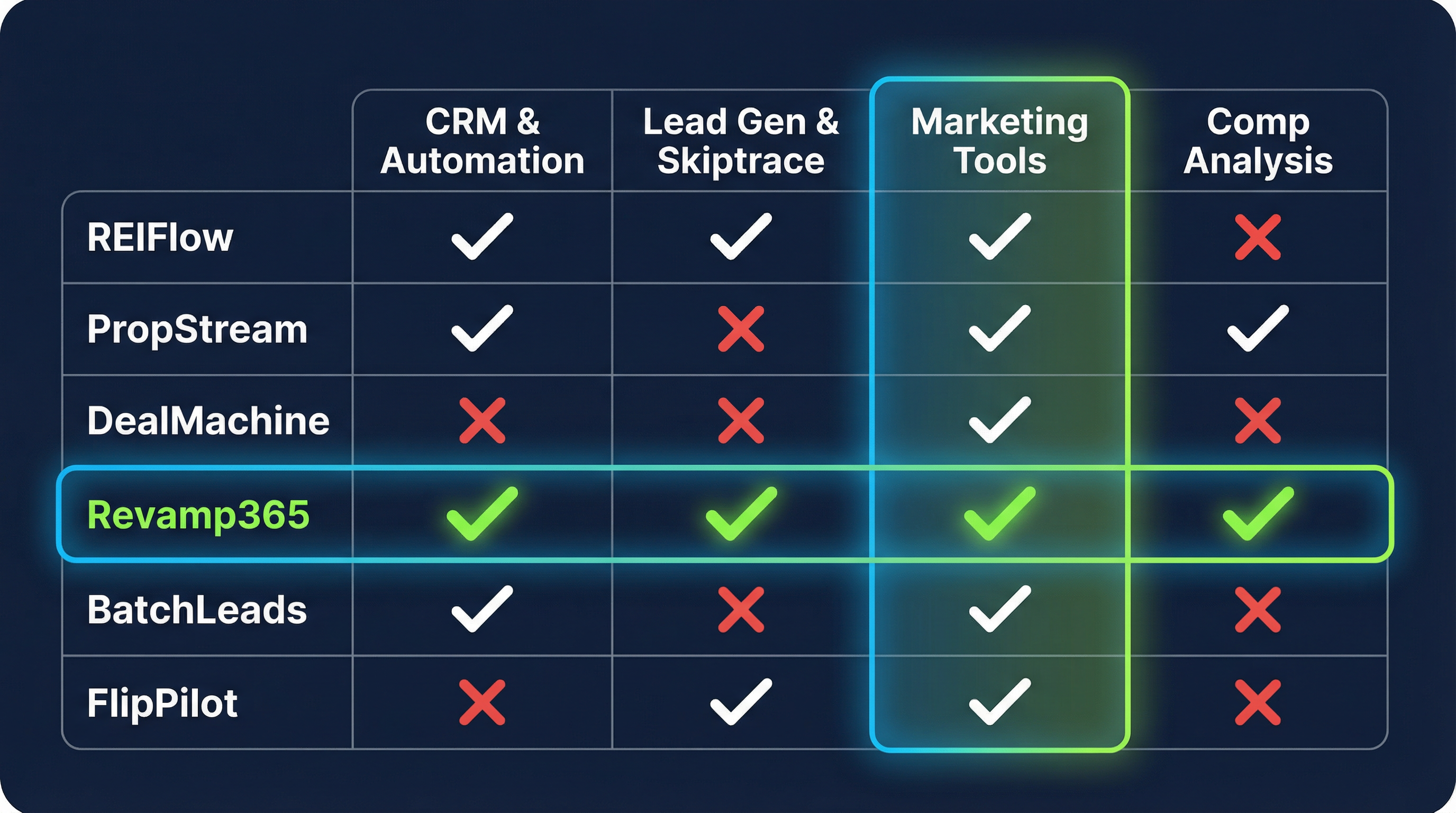
Revamp365 has built-in skip tracing designed for investors who want to skip the hassle. Enter a property address or upload a list, and the platform pulls owner names, phone numbers, and emails automatically.
Here’s why this matters:
- No third-party jumping — skip trace and CRM enrichment happen inside one dashboard.
- Results feed directly into AI calling campaigns and SMS outreach.
- Save hours per week by automating data enrichment.
You can start skip tracing your first list in minutes, not days.
Common Skip Tracing Mistakes and How to Avoid Them
- Using outdated or incomplete owner info: Always start with the latest public records to avoid chasing dead ends.
- Ignoring data validation: Don’t assume all skip trace results are accurate. Use tools that verify numbers and emails.
- Not respecting legal boundaries: Avoid using information for non-marketing purposes to stay compliant.
- Failing to integrate skip tracing with outreach: Manual data transfers kill momentum. Automate wherever possible.
How to Skip Trace Your First Property List Using Revamp365
- Upload your property list or enter property addresses one by one.
- Hit the skip trace button to pull owner names and contact info.
- Review and clean the enriched data inside the CRM.
- Launch AI calling and SMS campaigns targeting these owners.
- Track responses and update lead statuses without leaving the platform.
This streamlined approach turns cold lists into hot leads fast.
What Is Skip Tracing Real Estate Investors Should Never Ignore
Skip tracing isn’t a nice-to-have — it’s a foundational skill for wholesalers and fix-and-flippers who want to scale. Anyone serious about off-market deals must master it to find motivated sellers before the competition.
Use Revamp365 to save time, reduce errors, and automate outreach. Combine this with smart deal analysis and you’ll close more deals faster.
Start skip tracing your first property list with Revamp365 now
The largest database of curated off-market deals in the nation.
Claim Your AccessFor more tactical tips on finding off-market deals, check out how to find off-market deals and learn how to target motivated seller lists. Automate your outreach with AI calling agents integrated right into your workflow. And dive deeper into skip tracing strategies to sharpen your edge.