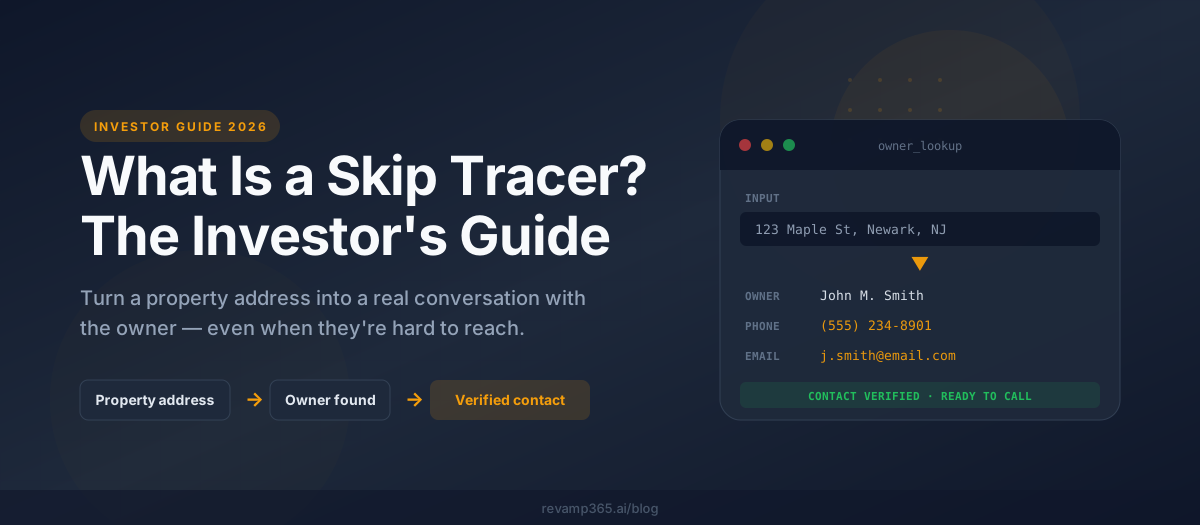

What Is a Skip Tracer?
A skip tracer is a person or service that finds the current contact information — phone numbers, email addresses, and mailing addresses — for someone who is difficult to reach. In real estate investing, a skip tracer takes a property address or an owner's name and returns a verified way to actually contact that owner, even when public records show nothing but a name on a deed.
The term comes from the debt-collection world. "To skip" described a person who had left town — "skipped" — and "tracing" meant tracking them down. Today the same craft powers a far friendlier use case: connecting investors with property owners who may be ready to sell but aren't listed anywhere you can easily find them.
If you have ever pulled a list of distressed, absentee, or inherited properties and hit a wall because you had a name but no number, a skip tracer is the bridge between that list and a real conversation.
What Does a Skip Tracer Actually Do?
A skip tracer answers one question: how do I reach this specific person right now? To do that, a good skip tracer does four things:
- Identifies the right person. Names are messy. There are dozens of "John Smiths," owners hold property in trusts and LLCs, and mailing addresses go stale. A skip tracer ties the property to the actual human who controls it.
- Locates current contact details. Phone numbers, email addresses, and forwarding addresses — ideally the ones in use today, not the ones from five years ago.
- Verifies and ranks the results. The best results come back ranked by confidence, so you call the most likely number first instead of burning time on dead lines.
- Flags compliance risk. A responsible skip tracer or platform checks numbers against the Do Not Call registry and surfaces litigator flags before you ever dial.
In short, a skip tracer turns a cold address on a spreadsheet into a warm, callable lead.
Skip Tracer vs. Skip Tracing Software: What's the Difference?
The word "skip tracer" can mean two different things, and the distinction matters for how you'll actually work.
A manual skip tracer is a person — a researcher or service you hire to track down one hard-to-find individual at a time. Skip tracing software automates that same lookup across an entire list at once, which is what most real estate investors use day to day.
| Manual skip tracer (a person) | Batch skip tracing software | |
|---|---|---|
| Best for | One tough, complex case | Whole lists of leads |
| Speed | Hours to days per person | Minutes for hundreds of records |
| How you use it | Hand off a name, wait for a report | Upload a list, download results |
| Cost structure | Charged per case or per hour | Charged per record, lower at volume |
| Typical user | Investigators, attorneys, recovery agents | Wholesalers, flippers, agents, lenders |
For real estate investing, the practical answer is almost always software. You're not chasing one person — you're trying to reach a list of motivated sellers, and you need contact info for as many of them as possible, fast. That high-volume approach is called batch skip tracing, and it's the engine behind most modern outreach campaigns.
How Do Skip Tracing Services Find Contact Information?
Skip tracing services work by cross-referencing many data sources to connect a property and a name to a current, reachable phone number or email.
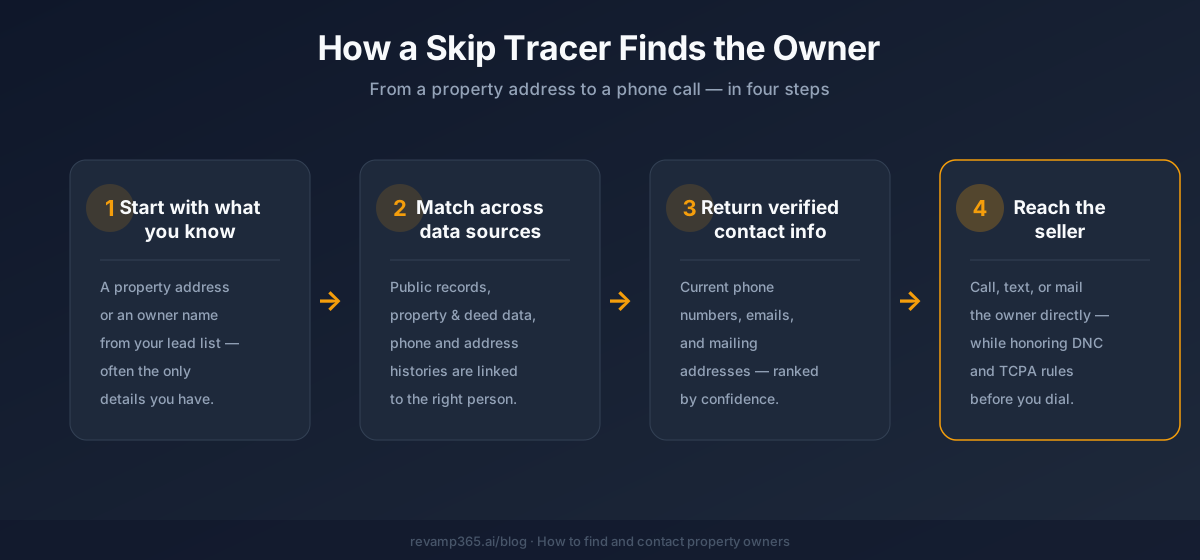
The inputs and sources typically include:
- Public records — county assessor and recorder data, deeds, tax rolls, and court filings that establish who owns what.
- Property and ownership data — the link between a parcel, its legal owner, and any trust or entity behind it.
- Phone and address histories — the trail of numbers and addresses associated with a person over time, so the service can surface the one that's current.
- Identity matching — the logic that resolves "which John Smith" by lining up dates, locations, and relationships until one person clearly fits.
The quality of a skip trace depends heavily on two things you control: the accuracy of the information you feed in, and the freshness of the data the service draws on. Garbage in, garbage out — a clean, well-formatted list almost always returns better results than a messy one.
How Accurate Is a Skip Tracer?
A reputable skip tracer returns valid contact information for the large majority of a typical, well-prepared list — but no service hits every record, and accuracy varies. The share of records that come back with a usable number is called the hit rate, and it depends on data freshness, how many sources the service taps, and the quality of the names and addresses you submit.
A few realities worth setting expectations around:
- No one is perfect. Some owners are genuinely unreachable — numbers disconnected, identities buried in entities, or simply no current data on file.
- Multiple numbers are normal. A single owner often comes back with more than one possible phone number; expect to dial the highest-confidence number first.
- Freshness beats volume. A service that updates its data frequently will usually beat one that returns more numbers but hasn't refreshed them in months.
If your results consistently feel thin, the fix is usually cleaner input data or a service with fresher sources — not more dialing.
How Real Estate Investors Use a Skip Tracer
Investors use skip tracing to turn a list of properties into a list of people they can call. The most common lead types that need skip tracing are exactly the ones with no public phone number attached:
- Absentee owners — landlords who don't live at the property and often don't even live in the state. Skip tracing finds where they actually are. (See: absentee owner lists.)
- Probate and inherited property — heirs who now control a property but were never the listed owner. (See: how to find probate leads.)
- Pre-foreclosure owners — distressed sellers who are hard to reach precisely when timing matters most. (See: pre-foreclosure investing.)
- Vacant and tired-landlord properties — owners who have mentally moved on and just need the right offer.
The workflow is consistent: build a targeted list, skip trace it for contact info, then reach out. If you want the front half of that process, start with how to build a motivated seller list.
DIY Skip Tracing vs. Hiring a Skip Tracer vs. Batch Software
You have three ways to skip trace a lead. Here's when each makes sense:
- Do it yourself (free or near-free). Searching county records, Google, and social media by hand can work for a single high-value property. It does not scale — once you have more than a handful of leads, manual research eats your week.
- Hire a manual skip tracer. Worth it for one genuinely difficult target — an owner hiding behind layers of entities, for example. Overkill for routine lists.
- Use batch skip tracing software. The default for investors. Upload a list, get verified contacts back in minutes, and feed them straight into your outreach. This is where platforms like Revamp 365 sit — skip tracing built directly into the list-building and CRM workflow, so the contacts you find land in the same place you'll call, text, and track them.
What to Do After You Skip Trace
Finding the number is only step one — reaching out the right way is what closes deals. Two things to get right before you dial:
- Stay compliant. Skip-traced numbers must be handled within calling and texting rules. Scrub against the Do Not Call list and understand your obligations. (See: TCPA compliance for investors.)
- Have a script ready. A verified number is wasted if the conversation stalls. (See: cold calling scripts for wholesalers.)
From there, the contact info flows into your normal outreach — calls, texts, and mail — ideally tracked in one real estate CRM so no lead slips through.
Where Skip Tracing Fits in the Bigger Picture
Skip tracing is one link in a chain. The full motion looks like this: find properties → build a targeted list → skip trace for contacts → reach out → close. A skip tracer powers the middle step that makes the rest possible.
If you want to go deeper on the practice itself rather than the role, read what is skip tracing in real estate. And if you're choosing a platform to run the whole workflow, see our breakdown of the best real estate wholesaling software.
Frequently Asked Questions
Is skip tracing legal?
Yes. Skip tracing uses lawfully available data to locate contact information, and it's widely used across real estate, lending, and recovery. What matters is how you use the results: calling and texting are governed by rules like TCPA and the Do Not Call registry, so scrub your numbers and follow the law before you reach out.
Is a "skip tracer" the same as "skip tracing"?
Nearly. A skip tracer is the person or service doing the work; skip tracing is the process itself. In real estate, "skip tracer" most often refers to the software or service investors use to look up owner contact info at scale.
How much does a skip tracer cost?
Manual skip tracers usually charge per case or by the hour, while batch software is priced per record — and the per-record cost drops as your volume goes up. For investors running lists, per-record software is far more economical than hiring a person for each lookup.
Can I skip trace a property for free?
You can do limited DIY research for free using county records, search engines, and social media. It works for one property but doesn't scale — which is why investors with real lead volume use a paid service that returns verified contacts in minutes.
What information do I need to skip trace a property?
At minimum, a property address or an owner's name. The more accurate your input — correct spelling, full address, any known prior details — the better your hit rate. Clean input is the single biggest lever you control.
How accurate is skip tracing?
A good service returns usable contacts for the large majority of a well-prepared list, but never all of it. Accuracy depends on data freshness, the number of sources used, and the quality of the names and addresses you submit.
The Bottom Line
A skip tracer — whether a person or, more often, the software investors rely on — turns property records into reachable people. It's the step that converts a list you can't act on into a pipeline of motivated sellers you can actually call. Get your input data clean, pick a service with fresh sources, stay compliant on outreach, and skip tracing becomes one of the highest-leverage tools in your deal-finding stack.
Build targeted lists and skip trace them in one place with Revamp 365 — find owners, get verified contacts, and reach motivated sellers without juggling five tools.
The largest database of curated off-market deals in the nation.
Claim Your Access