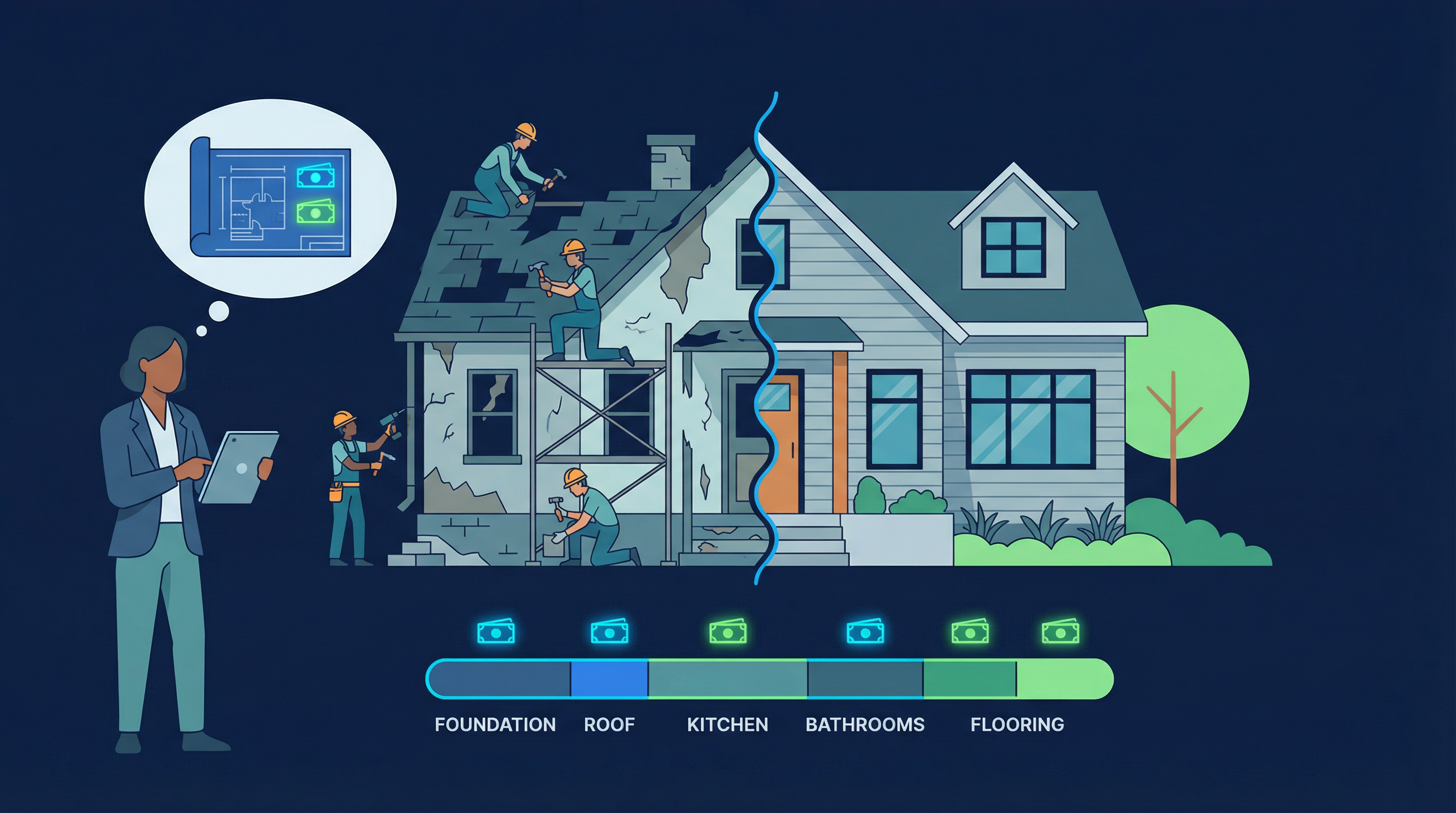

Why Accurate Rehab Budgets Make or Break Your Flip
You’ve found a promising property but your gut tells you the renovation costs could spiral out of control. Without a precise rehab budget, you’re flying blind — risking a deal that looks good on paper but hemorrhages profit once the dust settles. Studies show that 60-70% of fix and flip investors lose money due to underestimating renovation expenses.
Knowing how to build rehab budget fix and flip projects is your first line of defense against surprise costs and blown margins. It’s about more than throwing numbers on a spreadsheet — it’s a science that links your rehab scope directly to the property’s after-repair value (ARV). When you control the budget, you control the deal.
How Do You Start Building a Rehab Budget?
Begin with a thorough property walkthrough. Don’t rush this. Walk every room, basement, attic, and exterior area. Take notes and photos. Your goal is to draft a scope of work real estate investing document that details every repair and upgrade needed.
Break down tasks by category: roof repairs, HVAC servicing, electrical updates, plumbing fixes, kitchen and bathroom remodels, flooring, painting, landscaping, and any structural work. This breakdown will keep your budget organized and help you prioritize.

What Are the Major Rehab Categories and Typical Cost Ranges?
Here’s a realistic cost range for each major renovation category, based on median mid-market properties:
- Roof: $5,000–$12,000 depending on size and material
- HVAC: $4,000–$8,000 for replacement or major servicing
- Electrical: $3,000–$7,000 for panel upgrades and rewiring
- Plumbing: $2,500–$6,000 to fix leaks, replace pipes, or update fixtures
- Kitchen Remodel: $15,000–$30,000 for cabinets, counters, appliances
- Bathroom Remodels: $7,000–$15,000 per bathroom
- Flooring: $3–$8 per sq. ft. for hardwood or tile
- Painting: $2,000–$5,000 interior and exterior combined
- Landscaping: $1,000–$4,000 depending on scope
Adjust these ranges up or down based on your local market and property condition. If you’re targeting higher-end finishes, budget accordingly.
How to Get Contractor Bids That Don’t Waste Your Time
A rehab cost estimator real estate investor trusts isn’t just about guessing — it’s about getting multiple bids from licensed contractors. Aim for at least three quotes to compare prices and scope.
When you request bids, provide your detailed scope of work. Avoid vague descriptions like “fix kitchen” — spell out whether it includes cabinets, countertops, appliances, or plumbing. This precision avoids surprises.
Once bids come in, evaluate them not just on price but on:
- Timeline estimates
- Materials specified
- Contractor reputation and references
- Payment terms and warranty
Don’t pick the cheapest blindly. A low bid that cuts corners will cost you more later.
Why You Need a 10–15% Contingency Budget
Renovations almost always uncover hidden issues — rotten framing, outdated wiring, or plumbing leaks. Set aside at least 10–15% of your total rehab budget as a contingency. This buffer prevents you from having to halt work or scramble for cash mid-project.
If you’re working with a tight margin, this contingency is non-negotiable. Consider it part of your project’s fixed costs.
How to Track Actual vs. Budgeted Costs During Rehab
Budgeting isn’t a one-and-done exercise. Track expenses weekly using a simple spreadsheet or project management tool. Compare actual spends to your budget line items.
Flag any categories running over early and investigate. If your kitchen is costing 20% more than expected, ask why and adjust your scope or funds accordingly. This active budget management keeps your flip profitable and on schedule.
Common Budget Mistakes That Destroy Flip Profits
Investors often make these costly errors:
- Skipping the walkthrough or rushing the scope: Missing repairs tank your budget.
- Underestimating labor costs: Labor is 30-50% of renovation expenses.
- Ignoring permits and inspection fees: These add unexpected costs and delays.
- Over-improving the property: Spending more than the neighborhood supports kills ROI.
- No contingency fund: One hidden issue can blow your entire budget.
Avoid these mistakes by being methodical, realistic, and disciplined.
How Does Your Rehab Budget Impact ARV? Use Data, Not Guesswork
A rehab budget only makes sense when tied to the property’s after-repair value. Spend $40,000 on a kitchen upgrade that only adds $20,000 to your ARV? You just lost $20,000 in equity.
This is why using Revamp365’s AI-powered ARV comps is a must-have tool. It analyzes recent sales and market trends to estimate how much value your planned renovations will add. This data-driven approach lets you decide if a scope of work is worth the investment.
For example, Revamp365’s platform can show you how similar kitchen upgrades impacted ARVs in your target neighborhood — so you can tailor your rehab budget to maximize profit, not just aesthetics.
How to Use Revamp365’s ARV Tool to Validate Your Rehab Budget
After building your rehab budget, plug your planned renovations into Revamp365’s ARV calculator. Compare the projected ARV with your purchase price plus rehab costs.
If your total investment approaches or exceeds 70% of the ARV, you need to cut costs or adjust your scope. This quick validation prevents overpaying and keeps your flip profitable.
With Revamp365, you can also run comps automatically to benchmark your ARV assumptions against real market data, avoiding guesswork.
Next Steps: Tighten Your Rehab Budget and Scale With Confidence
Mastering how to build rehab budget fix and flip projects isn’t just about saving money — it’s about making smarter offers and managing projects with surgical precision. Use your scope of work as the backbone, get solid contractor bids, include contingency, and track costs weekly.
Validate every dollar you plan to spend against the ARV uplift using Revamp365’s AI-powered tools. This approach turns your rehab budget from a risky guess into a profit-driving strategy.
Calculate your rehab budget ROI with Revamp365’s ARV calculator now
The largest database of curated off-market deals in the nation.
Claim Your AccessFor more on evaluating deals and running comps like a pro, check out our guides on how to analyze fix and flip, how to calculate ARV, and how to run comps.