
Why Transitioning from Agent to Investor Pays Off Now
You’ve got MLS access, market data at your fingertips, and negotiation skills honed by countless deals. Yet, the paycheck as an agent can feel capped, especially if you’re chasing commissions in a saturated market. Transitioning into investing lets you control your income, scale faster, and build real wealth—using the same resources you already have.
The real estate agent transition to investing isn’t just a career pivot; it’s an upgrade. You’re moving from representing buyers and sellers to owning deals, controlling your pipeline, and capturing the full profit margin. But it demands a mindset shift and tactical moves beyond standard agent work.
What Unique Advantages Do Agents Have When Investing?
Agents start with a leg up. MLS access alone gives you a better pulse on market comps than most investors. You can spot undervalued properties, price trends, and neighborhoods heating up before the masses catch on.
Your negotiation skills translate directly. You know how to read sellers, navigate objections, and close deals quickly. Plus, your existing client relationships can double as a lead source for off-market deals—if you position yourself right.
Successful agents also understand local zoning, permit processes, and market cycles. That knowledge cuts risk and speeds up rehab-to-rental or flip timelines.
But the biggest advantage? You can run dual income streams. You don’t have to quit your day job immediately. Instead, build a hybrid model where your agent business fuels your investing pipeline.
How to Use MLS Access for Investment Analysis Beyond CMAs
A standard CMA shows you what a property is worth based on recent sales. For investing, that’s a starting point, not the finish line.
You need to dig deeper:
Identify distressed or off-market potential: Use MLS filters to find properties listed for longer than 60 days or with price reductions over 10%. These sellers may be motivated or open to creative offers.
Analyze neighborhood trends: Look beyond property-level data. Track inventory levels, average days on market, and rent comps nearby. Calculate cash flow potential for buy-and-hold.
Estimate ARV with precision: Don’t rely solely on CMAs. Use tools like Revamp365’s AI-powered ARV calculator that incorporates renovation variables and current market shifts to forecast realistic after-repair values.
Calculate rehab and holding costs: MLS data can hint at property condition through listing descriptions and photos. Combine this with local contractor quotes to budget repairs accurately.
By layering MLS insight with AI-driven analysis, you’ll spot deals that traditional investors overlook.
How to Source Off-Market Deals Using Your Agent Network and Skip Tracing
Off-market deals are where serious investor profits happen. As an agent, you already have a network of other agents, brokers, and clients. Use those relationships strategically:
Build a pocket list of agents who specialize in expired or withdrawn listings. They often know sellers who couldn’t sell and might consider off-market offers.
Reach out to landlords with MLS rental listings about buying their properties. Many want out but never list for sale.
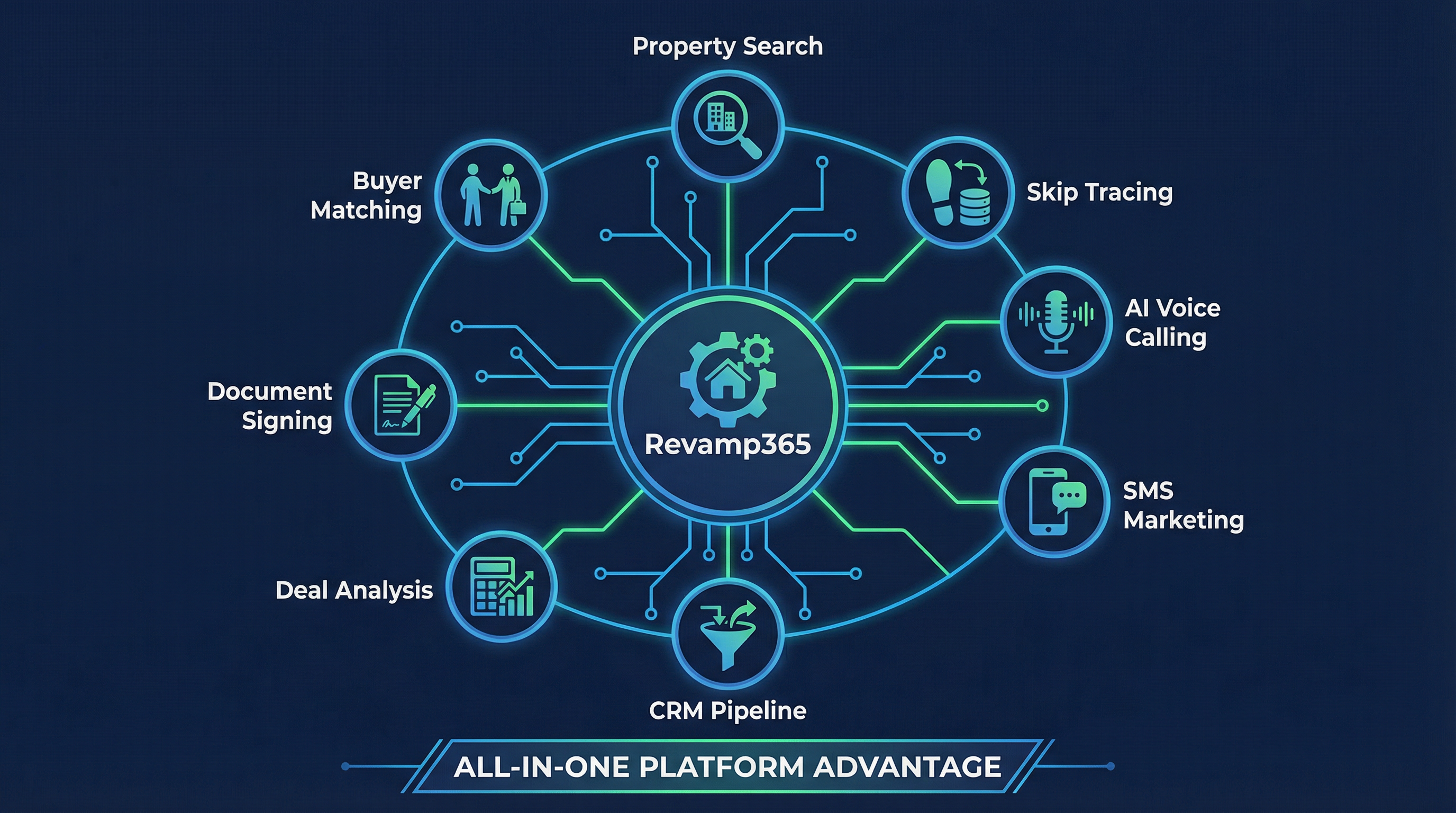
Use skip tracing tools integrated with Revamp365 to find accurate contact info for off-market owners. This lets you reach owners directly with offers before the property hits MLS or auction.
Leverage AI-powered voice agents to run proactive outreach campaigns. Automate calls and texts to absentee owners at scale without burning out your schedule.
These tactics turn your agent relationships and MLS data into a consistent pipeline of exclusive leads.
What Legal and Disclosure Rules Must Agent-Investors Follow?
Being a licensed agent and an investor comes with specific legal obligations. Transparency isn’t optional:
Disclose your dual role in every transaction where you have a personal interest. This includes deals you’re buying yourself or wholesaling.
Follow your state’s real estate commission rules on agency relationships and conflict of interest. Some states require written disclosure forms for agent-investors.
Avoid steering clients toward your own investment deals unless it’s fully disclosed and in their best interest. That can lead to license discipline or lawsuits.
Keep separate documentation and accounting for your agent commissions versus investment profits. This protects you during audits and tax filings.
Understanding and managing these requirements protects your license and reputation.
How to Build an Investor Pipeline Alongside Your Agent Business
You need two pipelines: one for clients and one for investor leads. Managing them separately avoids confusion and maximizes follow-up efficiency.
Use a CRM built for this dual role, like Revamp365’s platform, which lets you tag leads as agents, buyers, sellers, or investors. Automate SMS drip campaigns tailored to each group.
Segment your communication:
- Agent clients get market updates, new listings, and personalized outreach.
- Investor leads receive rehab project opportunities, off-market deal alerts, and seller outreach texts.
Employ AI voice agents to handle initial cold calls on your investor side, freeing you up to close deals and build relationships. This automation helps you scale without dropping the ball.
Maintain disciplined daily routines: spend mornings on agent tasks, afternoons on investor pipeline building and deal analysis.
What Does an Agent-Investor Hybrid Income Model Look Like?
Many agents hesitate to invest full-time because of income volatility. A hybrid model lets you keep steady commissions while building investment equity.
For example:
- Close 3–4 agent deals per month, netting $7,500–$10,000 each.
- Simultaneously wholesale 1–2 off-market properties monthly, earning $5,000–$15,000 per deal.
- Hold and rehab 1 rental property per quarter, generating $500 monthly positive cash flow plus long-term appreciation.
Within 12–18 months, your investment income can match or surpass agent commissions, giving you options to scale or shift focus.
You can tailor this model based on your market, capital, and time availability.
Common Mistakes Agents Make When Starting as Investors—and How to Avoid Them
Mistake #1: Treating investing like a side hustle with no dedicated systems. You need separate CRM, lead generation, and follow-up processes. Don’t mix investor leads with your buyer clients in the same spreadsheet.
Mistake #2: Over-relying on MLS deals. While MLS access is valuable, the best investor profits come from off-market or distressed deals. Build skills in skip tracing and direct outreach.
Mistake #3: Undervaluing legal disclosures. Failing to disclose your investor role can cost your license or lead to legal trouble.
Mistake #4: Ignoring rehab and holding cost accuracy. Overestimating ARV or underestimating repair costs kills deals fast. Use AI-driven tools to tighten your numbers.
Mistake #5: Not automating outreach and pipeline management. Manual follow-up drops leads and wastes time. Use platforms like Revamp365 with AI voice agents and SMS campaigns.
Avoiding these pitfalls keeps your transition smooth and profitable.
What’s Your 90-Day Action Plan to Start Investing as an Agent?
First 30 Days:
- Audit your current agent contacts and segment potential investor leads.
- Set up a dedicated CRM pipeline with Revamp365 to track investor leads separately.
- Learn skip tracing basics and run a test campaign targeting absentee owners.
- Start running AI-powered ARV comps on 5 potential investment properties weekly.
Next 30 Days:
- Reach out to 20 off-market leads weekly using AI voice agent campaigns.
- Analyze 3 deals per week with detailed rehab and ARV projections.
- Connect with other agents specializing in expired listings for pocket off-market deals.
- Review legal disclosure requirements and prepare standard forms.
Final 30 Days:
- Submit offers on at least 2 off-market properties.
- Close your first wholesale or buy-and-hold deal.
- Scale outreach using SMS drip campaigns for investor leads.
- Track income streams separately and adjust your hybrid business model accordingly.
This focused plan turns your real estate agent transition to investing into a structured, scalable process.
Start building your investor pipeline with Revamp365’s AI tools today
The largest database of curated off-market deals in the nation.
Claim Your AccessFor more on evaluating rehab potential, check out our ARV calculator. To deepen your off-market sourcing skills, explore how to find off-market deals. Dive into expert skip tracing strategies and streamline your dual pipelines with our advanced CRM features.